Early or Pre-Career Transitions
Early or Pre-Career Transitions and Personal Development

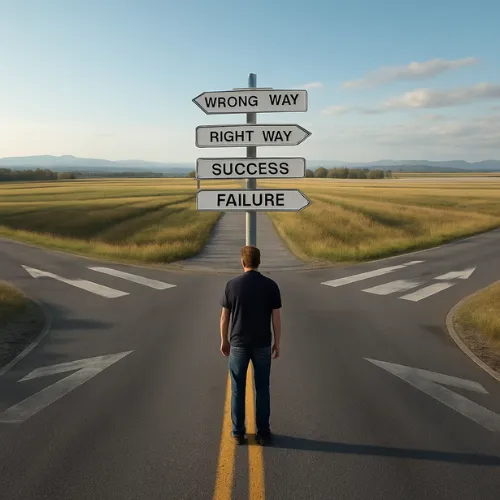
As I continue to think about personal development, I’ve been pondering on how this impacts those in transition periods, especially those that are early or even pre-career. Think individuals that are ready to transition from high school into the next phase of their life. How will they know if college, trade school, on the job training, or something else is the right path for them to pursue? Yes my answer would be to do some personal development, especially working to understand their personality style. But what generally happens is that they just go with whatever seems to be a good path, whatever their friends are doing, what their parents want them to do, or they try to meet whatever expectations surround them.
Let me give you a couple of examples:
College as the Default Path
One of my sons really was not a fan of organized education. He didn’t like being forced to go to classes and his Senior Year was filled with TA responsibilities and work release so he didn’t have to go to class. Yet come fall, he found himself in a dorm room with a bunch of his friends trying the local community college. Of course he found himself in the one chemistry class where the professor bragged that 75% of his students got A’s. Why? Because he forced them to come to class and do the busy work. My son didn’t last even half a semester before being done.
It’s easy to look back and see that he probably should have realized that was the eventual outcome, but in the moment, it is so much easier to just go along with what others feel you should do or what others you want to be around are doing. This is a good example of not taking charge of your own personal development and life path.
Medical School Dream or Not
I had similar struggles coming out of high school. There were huge expectations from my extended family and those that mentored me in high school. One teacher told me he expected me to have a Dr. in front of my name at some point. I adopted those dreams. My first year went just fine. Then I took a two year break to go on a church mission and coming back to school, things went downhill quickly. I had no desire to be in class. The idea of 10 more years of college was completely overwhelming. I struggled through it for a year before I realized it was no longer for me and I went to focus on other priorities.
It never occurred to me until I was completely under water to think that there might be a better path. This was definitely smack in the middle of the era where if you wanted to be successful, you had to have a college degree. I did eventually go back, but to a non-traditional university that allowed me to learn and complete the courses in a way that was much more in alignment.
My point at sharing these two examples is to point out how easy it is to fall into the trap of just following the plan someone else has for you and just abdicating our happiness and progress to that plan. It’s a lot more work and is very uncomfortable to push back on those that are driving you down a path or to take a step back and really evaluate what you want out of life. And then it’s even more work to start to execute on your plan, when all around you there seems to be a flood of easier paths.
I still remember having to tell my mother that I was dropping completely out of college. I was terrified to have the conversation and it didn’t go great. But it had to be done. It should have been done way before that but I just kept trying to “rub dirt on it” and power through.
If I had been more deliberate about my personal development, I would have handled things very differently.
What I Recommend

First, I think you need to pay attention to which voices you allow to influence your life. Most folks at that point in life are very active in social media, have friends, family, leaders, and others that all are willing to help them figure out who they are and who they want to be. We really can’t avoid this completely in life, but we can make deliberate decisions about which voices we allow to influence us and which voices it’s time for us to move on from.
Second, you need to start learning more about yourself than you ever have. I personally recommend taking a Myers-briggs style personality assessment. I don’t believe those assessments can tell you perfectly what your personality is, but I believe that the information you get from taking an assessment can help you learn enough about yourself to set goals and begin building a plan. This is something I cover more extensively in my Personal Development Foundations Online Course.
Third, chart your own path and just get started. Lay out the path that you think aligns best with who you want to be. You don’t need the entire plan, nor do you need to know on day one of post high school what life looks like in 10 years. What I recommend you have is a map for the next few steps you want to take. These should be smaller, simpler steps that you can act on and that will inform the next steps in your process.
Taking this approach will help you to build momentum. I call this an MVP, minimum viable plan. Put together just enough so that you can start taking action but yet not so much that when you run into the first diversion or opportunity to course correct or tweak the plan that you are so invested in the 500 things you said you were going to do over the next decade that you are unwilling to change the plan.
Fourth, get started and embrace course correction. Start taking steps. As you take one step you start to clarify what the next might be. That could be something you have identified or it could be something completely different that you never would have thought of without taking that first step.
Looking for more thoughts like this as well as tips, tricks, and more personal development focus? Click here to sign up for my upcoming newsletter.
